
Microchip 24LC1026-I/SM 1024K I2C Serial EEPROM: Features and Application Design Considerations
The Microchip 24LC1026-I/SM is a high-density, 1,048,576-bit (1024K) Serial Electrically Erasable PROM (EEPROM) organized as 131,072 words of 8 bits each. This device, housed in an 8-lead SOIC package, is designed for applications requiring non-volatile memory with a simple two-wire serial interface. Its combination of high capacity, low power consumption, and robust feature set makes it a compelling choice for a wide array of modern electronic systems.
Key Features and Operational Characteristics
The core of the 24LC1026's appeal lies in its implementation of the I2C (Inter-Integrated Circuit) protocol. This two-wire serial interface, comprising a bidirectional serial data line (SDA) and a serial clock line (SCL), drastically reduces the number of I/O pins required from the controlling microcontroller, simplifying board layout and freeing up critical MCU resources for other tasks.
A standout feature of this memory IC is its 1-Megabit capacity, a significant density for an I2C EEPROM. To manage this large address space within the constraints of the I2C protocol, the device incorporates an innovative software write-protect scheme and a clever addressing mechanism using a block select bit in the device address byte. This allows the memory array to be treated as two independent 512K blocks, effectively doubling the addressable range.
The device operates across a broad voltage range (1.7V to 5.5V), supporting everything from advanced low-power microcontrollers to legacy 5V systems. Its low-power design is critical for battery-operated devices, featuring a standby current of just 1 µA (max) and an active read current of 1 mA (max) at 5.5V.
Data integrity is further ensured through built-in hardware write-protection. Asserting the `WP` (Write Protect) pin ties the entire memory array to a read-only state, safeguarding critical data from accidental corruption. Furthermore, the device supports a 64-byte page write buffer, enabling more efficient data transfer by allowing up to 64 bytes to be written in a single bus cycle, thus minimizing overall write time.
Critical Application Design Considerations
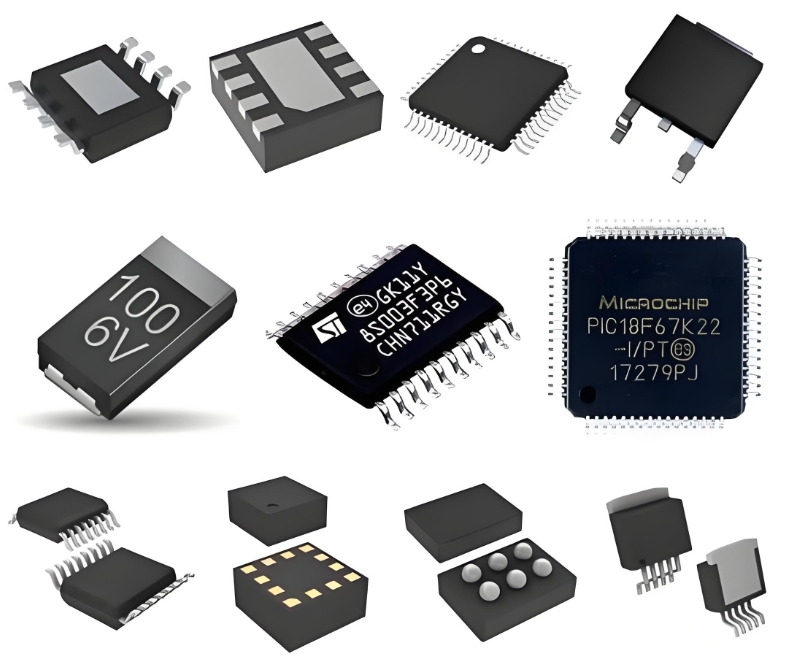
Successfully integrating the 24LC1026 into a design requires careful attention to several key areas:
1. I2C Bus Pull-up Resistors: The I2C bus is open-drain, requiring external pull-up resistors on both the SDA and SCL lines. The value of these resistors is a critical trade-off between bus speed (a lower resistance allows faster edges) and power consumption (a higher resistance uses less current). Typical values range from 2.2 kΩ for fast-mode (400 kHz) at 5V to 10 kΩ for standard-mode (100 kHz) at 3.3V.
2. Power-On and Write Cycle Timing: The system controller must adhere to the specified power-up sequence (`VCC` rise time) and ensure a stable power supply before initiating communication. Most importantly, the microcontroller must poll the device for write cycle completion. After issuing a write command, the EEPROM enters an internally timed write cycle (`tWC`) of up to 5 ms. During this time, it will not acknowledge its address. The master must poll the device by sending a start condition followed by the device address until the device responds with an acknowledge, indicating the write is complete and the device is ready for a new command.
3. Addressing and Block Selection: Designers must correctly implement the block select logic. The device address byte includes a bit (A16) that selects between the upper or lower 512K block of memory. Firmware must be written to manage this extended addressing correctly to avoid data corruption by writing to the wrong memory segment.
4. Board Layout and Signal Integrity: For longer bus lengths or noisier environments, proper PCB layout is essential. Keep SDA and SCL traces short, route them away from noisy signals like switching power supplies, and consider using a ground plane to enhance signal integrity and minimize capacitive loading.
5. Software Write Protection: Utilizing the volatile software write-protect registers allows specific sections of memory (1/4, 1/2, or the entire array) to be locked from writes. This is a powerful feature for field applications but requires careful firmware management to avoid accidentally locking the device.
In summary, the 24LC1026-I/SM provides a robust, high-capacity non-volatile memory solution ideal for data logging, parameter storage, and configuration saving in applications ranging from industrial controls and medical devices to consumer electronics and IoT nodes.
ICGOODFIND: The Microchip 24LC1026-I/SM is a highly integrated 1Mb serial EEPROM that excels in designs where MCU pin count, power budget, and data density are primary constraints. Its sophisticated feature set, including block select addressing and software/hardware protection, offers designers flexibility and data security. Careful attention to I2C bus design and write-cycle management is paramount for reliable operation.
Keywords: I2C EEPROM, Non-volatile Memory, Microcontroller Interface, Low-Power Design, Data Integrity

